
Are Vegan and Vegetarian the Same Thing?
Last year at Thanksgiving, my cousin announced she was going vegetarian. My aunt immediately freaked out and started googling whether vegetarians eat turkey (they don’t). Then my uncle chimed in, saying his coworker is vegan and can’t eat anything fun. The whole conversation was a mess, and honestly? I had no clue what the actual difference was either. Fast forward six months, and guess what? I decided to try cutting out meat myself. Not because I’m super environmentally conscious or anything (though that’s cool too), but mostly because I kept feeling sluggish after lunch and wanted to see if eating differently would help. Spoiler alert: it totally did.
But here’s what I learned along the way. When I told my friends I was trying this vegan vs vegetarian thing, everyone had an opinion. “You’ll never get enough protein!” “But what about cheese?” “Isn’t that the same thing?” Let me clear this up once and for all, because trust me, they’re NOT the same thing. And if you’re even a little curious about trying either one, keep reading. I’m going to break it down like I’m explaining it to my little brother (who asks a million questions about everything).
What Vegetarians Eat and Don't Eat?
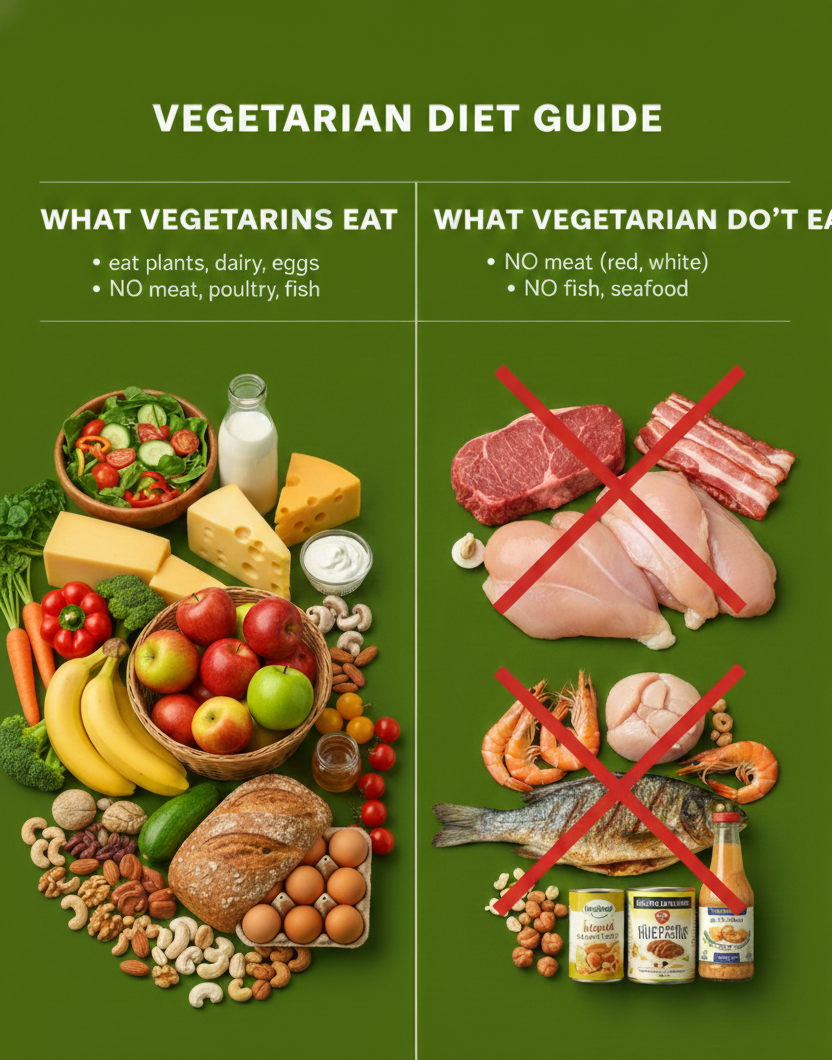
Alright, let’s start with vegetarians. Think of vegetarianism as the “easier” version if you’re just starting out. Vegetarians skip the meat, poultry, and fish. No chicken wings, no burgers, no salmon. But here’s where it gets interesting.
Most vegetarians still eat stuff that comes from animals. I’m talking eggs, milk, cheese, yoghurt, butter, honey, all that good stuff. So when my friend told me she was a vegetarian but still demolished an entire cheese pizza, I was confused at first. Then I realised, oh yeah, cheese is totally allowed!
There are actually different types of vegetarians, which I didn’t know until I started researching:
Lacto-ovo vegetarians eat dairy and eggs. This is the most common type. They’re living their best life with omelettes and ice cream.
Lacto-vegetarians eat dairy but skip eggs. So they’re all about that cheese life but pass on the scrambled eggs.
Ovo-vegetarians eat eggs but avoid dairy. Kind of the opposite situation. They can have an omelette but skip the cheese.
Pescatarians technically aren’t vegetarians, but they get lumped in sometimes. They eat fish and seafood but no other meat. My dad does this and calls himself “mostly vegetarian,” which makes my actual vegetarian cousin roll her eyes.
The main thing? Vegetarians avoid anything that requires the death of an animal. But products from living animals? Fair game.
What Vegans Eat and Don't Eat?
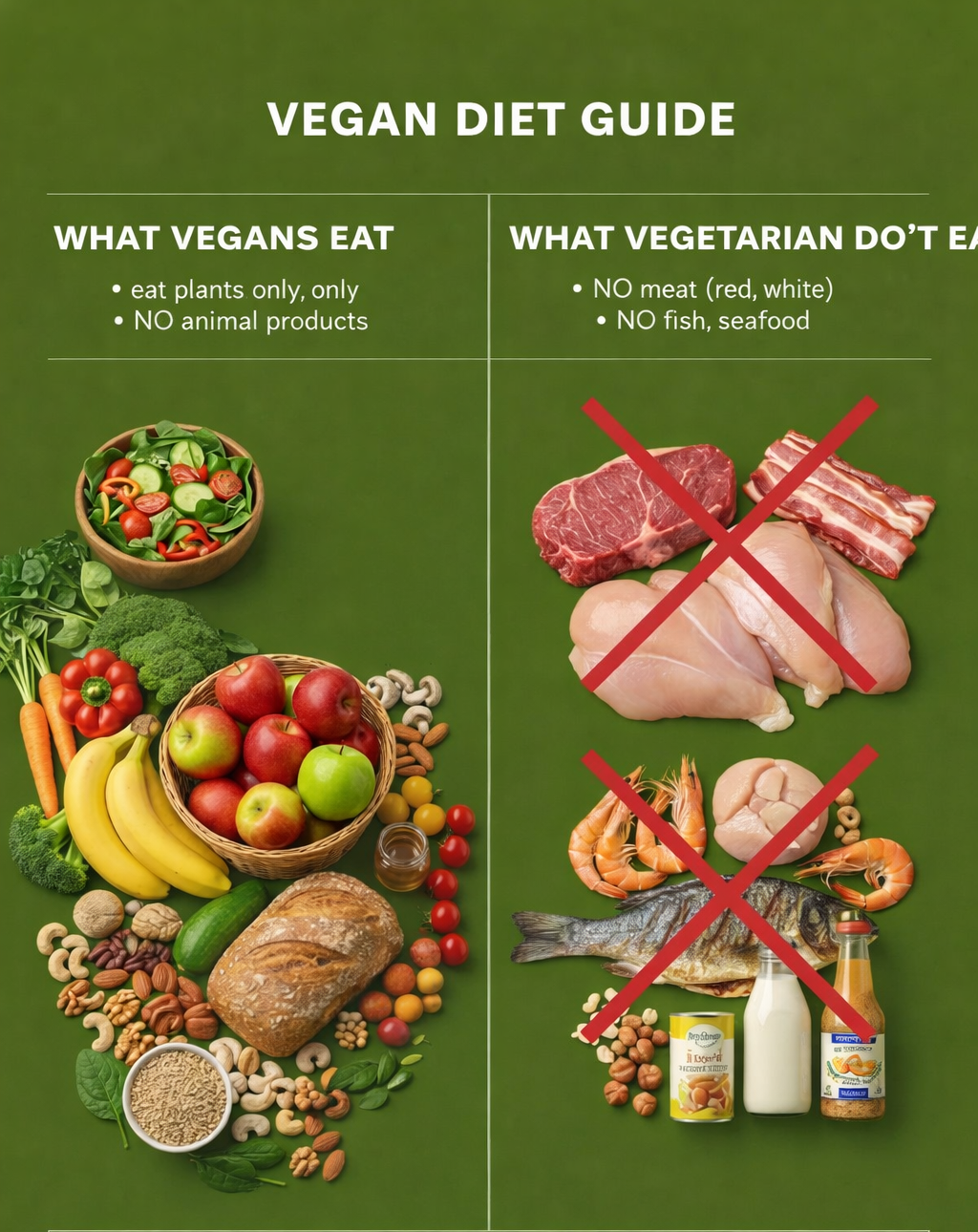
Now vegans. This is where things get serious. Veganism isn’t just about food; it’s a whole lifestyle. When I first met my roommate’s vegan boyfriend, I offered him some pasta with butter and he politely declined. I was like, “Dude, there’s no meat in this!” He explained that butter comes from cows’ milk, so it’s off limits.
Mind. Blown.
Vegans avoid all animal products. And I mean all of them. No meat, obviously. But also no dairy, no eggs, no honey (because it comes from bees) and even some surprising things like certain candies that use gelatin (which comes from animal bones, gross).
But it goes beyond the plate. Most vegans also avoid:
Leather jackets and shoes because, well, animal skin.
Wool sweaters because they come from sheep.
Certain makeup and skincare products either contain animal ingredients or were tested on animals.
Down jackets because those fluffy feathers come from ducks and geese.
My roommate’s boyfriend even checks his beer labels because some beers use fish bladders in the filtering process. I know, wild.
So yeah, being vegan is WAY more involved than just changing what you eat. It’s about avoiding animal exploitation in every part of your life.
The Big Difference in a Nutshell
Here’s how I explain the vegan vs vegetarian diet difference to people: vegetarians won’t eat animals, but vegans won’t use animals at all. Think of it like this. A vegetarian might wear leather boots and eat a cheese quesadilla for lunch. A vegan would skip both because the boots came from a cow and the cheese came from cow’s milk.
Both groups skip meat. But vegetarians stop there, while vegans take it several steps further. When I was testing out which approach worked for me, I started as a vegetarian. It felt less overwhelming. I could still have my morning yoghurt and put cheese on basically everything which I did, not gonna lie. After a few months, I experimented with going full vegan for two weeks just to see how it felt.
It was hard. I never realised how many random foods have milk powder or eggs in them until I started reading every single ingredient label at the grocery store. Bread? Sometimes has milk. Chips? Some flavours have dairy. Even some dark chocolate has milk fat.
Lifestyle Choices
This is something I didn’t expect. The vegetarian vs vegan which is healthier debate isn’t just about the food itself. It’s about why people make these choices and how it affects their entire life. Most vegetarians I know made the switch for health reasons or because they wanted to reduce their environmental impact. Some just don’t like the idea of eating animals but are okay with using animal products that don’t require killing anything.
Vegans, though? They’re usually all on the ethics. Every vegan I’ve talked to is super passionate about animal rights. They see using any animal product, even eggs or milk, as exploitation. One vegan friend told me she can’t morally justify drinking milk when calves are separated from their mothers in dairy farms. Heavy stuff. The lifestyle differences show up in weird ways too. My vegetarian friends will meet me at any restaurant as long as there’s a salad or pasta option. My vegan friends need to check the menu beforehand, call ahead to ask about ingredients, and sometimes we just end up at that one vegan cafe across town.
Shopping is different too. Vegetarians can grab food pretty much anywhere. Vegans have to hunt for speciality products or learn to make everything from scratch. My roommate’s boyfriend makes his own cashew cheese because store-bought vegan cheese is expensive and in his words, “tastes like sadness.”
Why People Go Vegan or Vegetarian?
So why do people actually do this? I asked around, and the answers were all over the place.
Health reasons: This was my main one. I wanted more energy and better digestion. Plant-based diets are packed with fibre, which helps with all that. Plus, cutting out processed meat made me feel less bloated.
Environmental concerns: Animal agriculture is kind of a disaster for the planet. Cows produce methane (a greenhouse gas), and raising animals for food uses tons of water and land. Some people go vegetarian or vegan just to reduce their carbon footprint.
Animal welfare: This is the big one for vegans, especially. They can’t get behind the factory farming industry and how animals are treated. Even if the animals aren’t killed (like dairy cows or egg-laying chickens), vegans argue that the conditions are still cruel.
Religious or cultural reasons: Some religions encourage or require vegetarian diets. Hinduism and Buddhism, for example, often promote not harming animals.
Just trying something new: Honestly, some people just want to see if they can do it. It’s a challenge especially going vegan. One of my friends did “Veganuary” (vegan January) just for fun and ended up sticking with it.
Which One's Right for You?
I can’t tell you which diet is better because it totally depends on you. What works for me might not work for you and that’s totally fine.
Here’s what I learned from my experiment:
Start with a vegetarian if you want an easier transition. You can still enjoy a lot of your favourite foods with minor tweaks. Pizza? Just skip the pepperoni. Pasta? Load it up with veggies and cheese. Breakfast? Eggs and toast are still on the table. The vegetarian vs vegan benefits are pretty similar health-wise, so don’t stress about going full vegan right away if it feels overwhelming.
Try vegan if you’re super committed to the ethics. If animal welfare is your main concern and you want to fully align your lifestyle with those values, veganism makes sense. Just know it requires more planning and effort, especially at first. You can also do a mix. I know people who eat vegan at home but are flexible when eating out. Others do vegetarian most of the time but vegan a couple of days a week. There are no rules, the police are coming to arrest you for having cheese on Tuesday.
The important thing is to do what feels sustainable for you. I tried going hardcore vegan for those two weeks, but I missed yoghurt and eggs too much. So now I’m mostly vegetarian with some vegan meals thrown in. It works for my lifestyle, and I don’t feel deprived.
Craving Vegan or Vegetarian Dishes Nearby?
Here’s something cool I discovered. If you’re in London and want to try some seriously good vegetarian food, check out The India Restaurant on Fleet Street. I stumbled into this place last month when I was desperately craving something plant-based that wasn’t just a sad salad.
Their veg dishes are honestly incredible. Like, the kind of food that makes you forget you’re not eating meat. The flavors are bold, the portions are generous, and everything tastes homemade. I had their vegetable curry and it was so good I went back the next day. The staff is super friendly too and can help you figure out what’s vegan versus vegetarian if you’re being particular about it.
Plus, it’s way cheaper than most London restaurants, which is a win when you’re trying to eat healthier without going broke. Definitely worth a visit if you’re exploring plant-based options.